"I have a dream… still unknown to the world."
The current trend in curriculum design places a strong emphasis on measurable and tangible outcomes, often at the expense of creativity, critical thinking, and problem-solving skills. However, education should not be reduced to a mere instrument for employment. Rather, it must cultivate thoughtful, responsible, and empathetic citizens by promoting value-based and culturally grounded education, aligned with cultural rights and sustainable empowerment.
Scholars such as Demmert (2011) call for a clearer articulation of cultural rights as a concept aligned with human rights, in order to develop modern curricula that reflect contemporary realities. Such curricula should incorporate critical themes, including environmental issues (climate change and natural heritage), gender concerns (gender equality and domestic violence), cultural dimensions (cultural rights, freedom of expression, and cultural empowerment), and social issues (political rights, digital literacy, social inclusion, and health awareness).
From a holistic perspective, a "Whole-Person Education" model is essential. This approach nurtures students' social, emotional, physical, and ethical development while encouraging creativity, supporting psychological well-being, and inspiring deep reflection. It creates pathways for meaningful opportunities and fosters both intellectual and emotional growth, reinforcing cultural rights and empowerment (The Daily Star, 2025).

The United Nations emphasizes that human rights education should be grounded in foundational frameworks such as the Universal Declaration of Human Rights (1948) and the Convention on the Rights of the Child (1989). These documents provide guiding principles through which students can interpret lived experiences and contribute to building inclusive, rights-based educational environments. However, the United Nations also acknowledges that documents alone are insufficient unless students actively engage with these principles through real-life experiences and critical reflection on justice, equity, freedom of expression, and cultural rights.
Globally, education systems often rely heavily on teacher-centered assessments, limiting students' opportunities to engage in curriculum evaluation or provide feedback on teaching practices. In many developing countries, including Bangladesh, curriculum development is frequently influenced by centralized decision-making processes that may not always reflect competency-based or inclusive approaches.
In discussions on global citizenship education, Dr. Shahida Khanom has highlighted that heritage education can sometimes be influenced by political narratives, particularly in developing contexts. Heritage-related subjects may lack practical implementation, including proper conservation, documentation, museum development, and community engagement. Frequent shifts in political perspectives can also affect the continuity of historical narratives, posing challenges to building a cohesive national identity.
To address these challenges, there is a need to reform assessment systems by incorporating freedom of expression across all levels of education. Encouraging participation from both students and families can promote transparency, accountability, and holistic cultural empowerment.
"Family involvement, especially within extended family systems, plays a significant role in child development and should be recognized as an integral part of cultural heritage and educational processes."
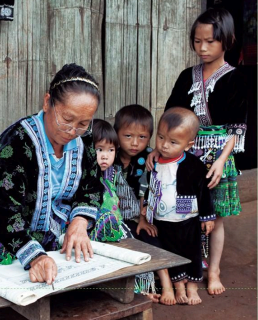
"Family involvement, especially within extended family systems, plays a significant role in child development and should be recognized as an integral part of cultural heritage and educational processes."
Experiential education is a transformative philosophy in which learners engage in direct experience and reflective practice. This approach enhances knowledge, develops practical skills, and strengthens individuals' ability to contribute meaningfully to society.
In this context, it is important to recognize that formal education is not the only pathway to intellectual excellence. South Asian heritage offers compelling examples of individuals whose genius emerged through lived experience, self-learning, and cultural immersion.
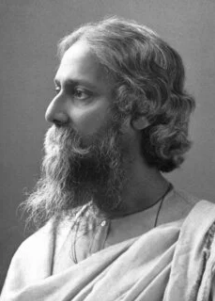
Rabindranath Tagore
Rabindranath Tagore pursued independent learning rather than completing formal university education yet became one of the most influential intellectuals and the first Asian Nobel Laureate. He also composed the national anthem of Bangladesh.
"Men can only think. Women have a way of understanding without thinking. Woman was created out of God's own fancy. Man, He had to hammer into shape."
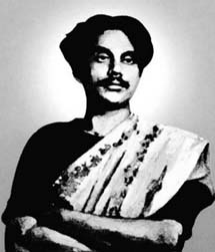
Kazi Nazrul Islam (1899–1976)
Similarly, Kazi Nazrul Islam, despite limited formal education due to financial hardship, developed profound literary and musical contributions shaped by diverse life experiences. He is the national poet of Bangladesh.
"Whatever great or benevolent creations exist in the world, Half of them have been done by women, and half by men."
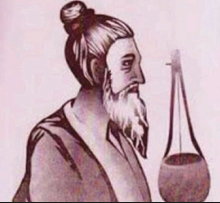
Lalon Shah
Another remarkable example is Lalon Shah, who, without formal academic training, became a renowned mystic, philosopher, and social reformer. His work, rooted in oral tradition and spiritual insight, is widely recognized as a masterpiece of oral intangible cultural heritage by UNESCO.
"People cry 'caste is lost, caste is lost' — what a strange illusion this is; No one is willing to engage in truth, all I see is hypocrisy and pretence."
"The Baul tradition of Bangladesh was officially recognized by UNESCO in 2005 as a Masterpiece of the Oral and Intangible Heritage of Humanity."
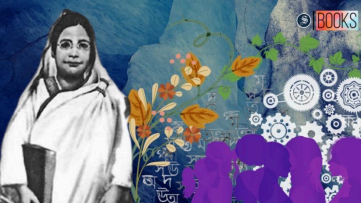
Begum Rokeya (1880–1932)
Rokeya Sakhawat Hossain, commonly known as Begum Rokeya, was a pioneering advocate for women's education in British India and a writer, educator, and social reformer. Due to the restrictions on women's mobility in her conservative family, she did not receive formal schooling. However, she became self-educated, learning Bengali and English with support from her brothers, Ibrahim and Khalilur Rahman. Her husband, Khan Bahadur Sakhawat Hossain, later encouraged and supported her continued education.
'A lion is stronger than a man, but it does not enable him to dominate the human race. You have neglected the duty you owe to yourselves and you have lost your natural rights by shutting your eyes to your own interests.'
"Sultana's Dream by Rokeya Sakhawat Hossain has been acknowledged as part of UNESCO Memory of the World Programme."
At present, a fully developed model for flexible education that accommodates exceptional talents within mainstream systems remains limited. However, as an initial step, storytelling methodologies can be introduced to amplify the voices of individuals with lived experiences and unique intellectual perspectives.
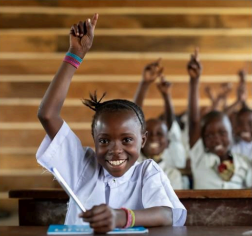
"Our voices must be included in education curricula.."
Women Cultural Empowerment International
Beyond conventional scientific approaches, storytelling serves as a powerful cultural tool that fosters mutual respect, inclusion, and engagement, aligning with cultural rights and freedom of expression. It enables students to actively participate in curriculum design and evaluation alongside educators.
Such participatory approaches ensure that all individuals are treated with dignity and respect, in line with human rights principles.
Insights derived from both teacher and student assessments can inform more effective policies, enhance curriculum development, and improve educational outcomes in ways that reflect each country's cultural and social context (UNESCO, 2023).
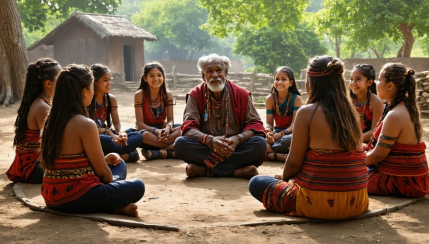
"Mentorship and Future Direction: We are here to help you pursue your dreams."
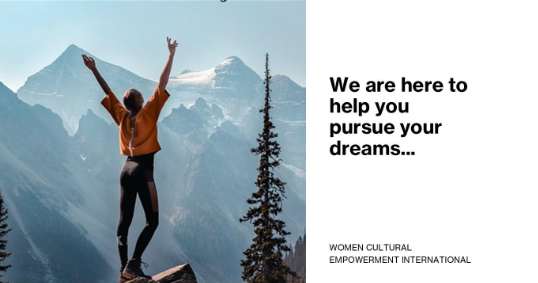
Students with diverse intellectual abilities and unique learning pathways should be supported through dedicated mentorship programs. Each student can be paired with a life mentor or coach from an early stage to guide their development alongside formal education.
Over time, Women Cultural Empowerment International (WCEI) aims to develop a comprehensive model for identifying, nurturing, and harnessing exceptional talent, ensuring that all learners — regardless of their learning style or background — are empowered to realize their full potential. This story is part of the author's article accepted by the United Nations Human Rights (2026).